




Gran Canaria is a diverse cycling destination offering routes for all levels, from challenging mountain climbs to relaxed coastal rides. The article highlights five top tours, including inland mountain routes around iconic spots like Roque Nublo, scenic rides through traditional villages and valleys, and coastal routes with ocean views. The island stands out for its varied landscapes, mild weather, and the perfect mix of sport and nature.

Gran Canaria is far more than just a beach destination. For cyclists, the island feels like a small continent – diverse enough to seriously challengeendurance, and breathtaking enough to turn every single kilometer into an experience. Changing microclimates, dramatic climbs, and a dense network of roads create endless possibilities, while also demanding a thoughtful route selection tailored to each rider’s level.
This guide offers insider knowledge from a local perspective. We present the five best cycling routes in Gran Canaria, including all relevant details on difficulty, ridingtime, and access points. You will also discover the highlights along the routes – and the cycling events that turn the island into a meeting point for the cycling community throughout the year.
Why is Gran Canaria a mecca for European cycling?
To understand why the island attracts cyclists from all over the world, it is worth looking beyond its already spectacular scenery. It is the combination of unique topography and outstanding infrastructure that makes Gran Canaria an exceptional cycling destination.
While much of Northern and Central Europe is frozen in winter, Gran Canaria remains unaffected: temperatures stay between 18°C and 25°C year-round thanks to the trade winds and the Canary Current, which act as a natural climate regulator.
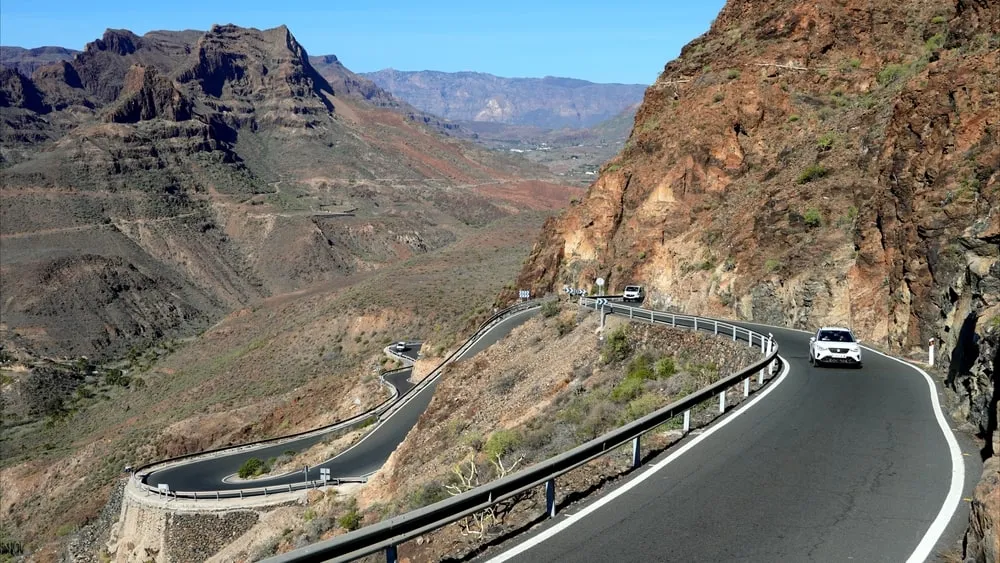
The real secret of the island lies in its microclimates. The central mountain massif blocks clouds from the north, ensuring almost year-round dry and sunny conditions on the southern side. This allows for long training rides with a level of planning certainty that is hard to find elsewhere—no constant weather checks, no improvisation.
The topography adds another dimension. Gran Canaria resembles a massive lemon squeezer with a central peak carved by deep ravines (barrancos). The result is a network of winding mountain roads and long climbs reminiscent of legendary Alpine or Pyrenean stages — only here, everything is concentrated on an island just 50 km across. And even if the legs complain: such variety on a single ride is rare.
The 5 best cycling routes in Gran Canaria
Five routes, five completely different faces of the island. This selection combines scenic beauty, varied terrain profiles, and real sporting challenge—whether as structured training or pure adventure. Each route tells its own story. You just have to ride it.
1. Soria Challenge (Reservoir Route)
The Soria route is the classic introduction for anyone exploring the south of Gran Canaria by bike for the first time. It demands enough effort to feel it—but not so much that you lose sight of the surroundings.
Technically accessible yet physically demanding, this ride is ideal for getting familiar with the roads, climbs, and climate of the island. At the top, the view opens up over the inland mountain landscape—and those who wish can stop at one of the restaurants around Soria. A well-earned finish after a rewarding climb.
Technical data: Soria Challenge
Difficulty: Medium - Hard
Totaldistance: 45 km (round trip from the coast)
Elevationgain: aprox. 900 m
Duration: 3.5 - 4 hours
Startingpoint: Maspalomas / Playa del Inglés
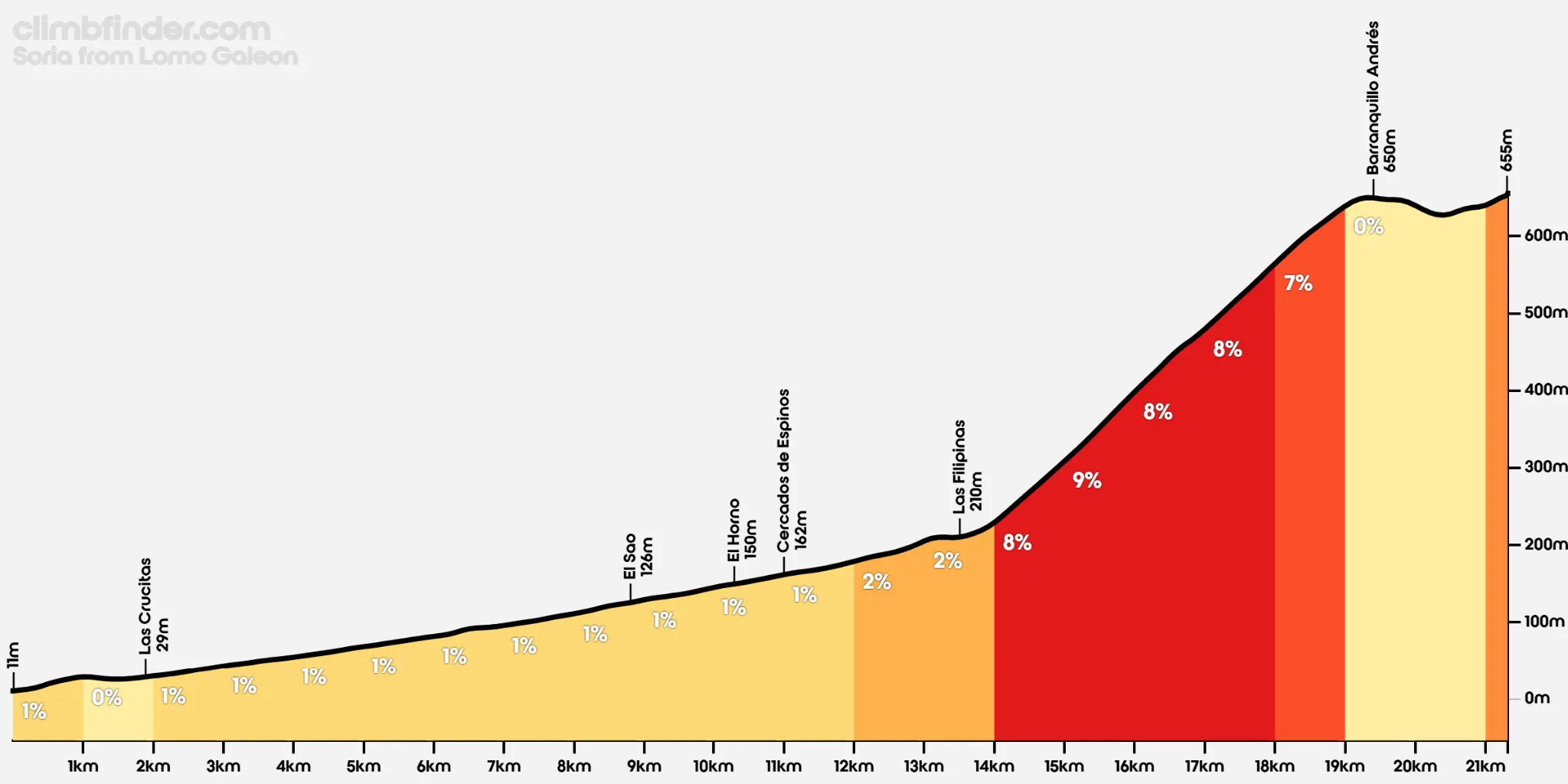
The route starts in the tourist south and heads west via the GC-500 towards Arguineguín. After a short coastal section with a slightly irregular profile, it turns onto the GC-505, which leads into the Barranco de Arguineguín valley.
The first 15 kilometers consist of a long, gentle climb with gradients between 2% and 4%—enough to find your rhythm without losing it. The real challenge begins after Cercados de Espino: the road narrows, the gradient rises to a steady 7–8%, and spectacular hairpin bends define this section.
The real reward awaits at the top: the Soria Reservoir, the largest in Gran Canaria. Nestled between palm groves and steep rock walls, the landscape feels almost prehistoric—one of the island’s most impressive scenery.
2. Climb to Pico de las Nieves
If the Soria route is about scenic enjoyment, Pico de las Nieves is the challenge every road cyclist dreams of. The highest point of Gran Canaria is one of the toughest climbs in Spain and requires strong legs as well as appropriate gearing. A minimum of 34×32 is recommended.
Technical data: Climb to Pico de las Nieves
Difficulty: Very high (expert only)
Totaldistance: 30 km (climb from Ingenio)
Elevationgain: 1.900 m (continuous)
Duration: 4.5 – 5.5 hours
Startingpoint: Ingenio or Telde (east ascent)
Several variations exist, but the eastern ascent via Ingenio and La Pasadilla is legendary—and rightly so. The climb begins in the historic center of Ingenio on the GC-120. The first kilometers serve as a warm-up, but after La Pasadilla the road turns brutal: ramps of 15%, with sections reaching up to 23%.
After this effort, the route connects to the GC-130 towards the Caldera de los Marteles. The landscape changes completely: dense pine forests replace the open terrain, and gradients ease to around 6%, allowing partial recovery before the final push.
At 1,949 meters above sea level, the summit rewards you with a panoramic view over Roque Nublo and, on clear days, Mount Teide on Tenerife rising above a sea of clouds—a view that quickly makes you forget the pain in your legs.
3. West Coast Route: Agaete – La Aldea
This route is a true homage to cycling in its purest form: wild landscapes, minimal traffic, and the Atlantic Ocean so close you feel you could reach out and touch it. It runs along some of the highest coastal cliffs in Europe through one of the most remote areas of the island.
Technical data: Agaete – La Aldea
Difficulty: Medium
Totaldistance: 35 km (one way)
Elevationgain: 1.100 m
Duration: ~3 hours
Startingpoint: Puerto de las Nieves (Agaete)
Starting in Agaete in the northwest, the route follows the old GC-200 road, now largely reserved for cyclists after new tunnels were opened for motor traffic—a rare luxury.
The road is carved into the rock and constantly undulates above the Atlantic. After several climbs through the western massif, it descends into the fertile valley of La Aldea de San Nicolás. As this section is highly exposed to wind, checking weather conditions before departure is essential.
Just before La Aldea, the Mirador del Balcón awaits—a suspended viewpoint offering one of the most dramatic coastal panoramas in the entire archipelago. Missing this stop would be a mistake.
4. Ayagaures – The heart of cycling
When time is short, you plan a recovery session, or the legs are not ready for big mountain efforts, Ayagaures is the perfect choice. It is also one of the favorite routes among guests staying at our cycling hotel on Gran Canaria.
Technical data: Ayagaures
Difficulty: Easy - Medium
Total distance: 28 km (loop)
Elevation gain: 500 m
Duration: 1.5 - 2 hours
Starting point: Maspalomas (GC-504)
The ride starts at Suites & Villas by Dunas and follows the GC-504 inland. The first ten kilometers climb almost imperceptibly through a semi-arid landscape dotted with farms and orchards.
At the end of the valley, the hardest section begins: a short but punchy 3 km climb at around 6% up to the Ayagaures Reservoir. After reaching the Pedro González pass, a fast, technical, and enjoyable descent leads back towards the coast through the Barranco de Fataga—combining training, scenery, and pure riding pleasure.
5. Fataga river route
This route connects the desert-like southern landscape with the traditional mid-altitude villages of the island, remarkable for its constant transition in color, vegetation, and climate.
Technical data: Fataga river route
Difficulty: Medium
Total distance: 52 km (return from San Bartolomé)
Elevation gain: 1.200 m
Duration: 3.5 – 4 hours
Starting point: San Fernando de Maspalomas
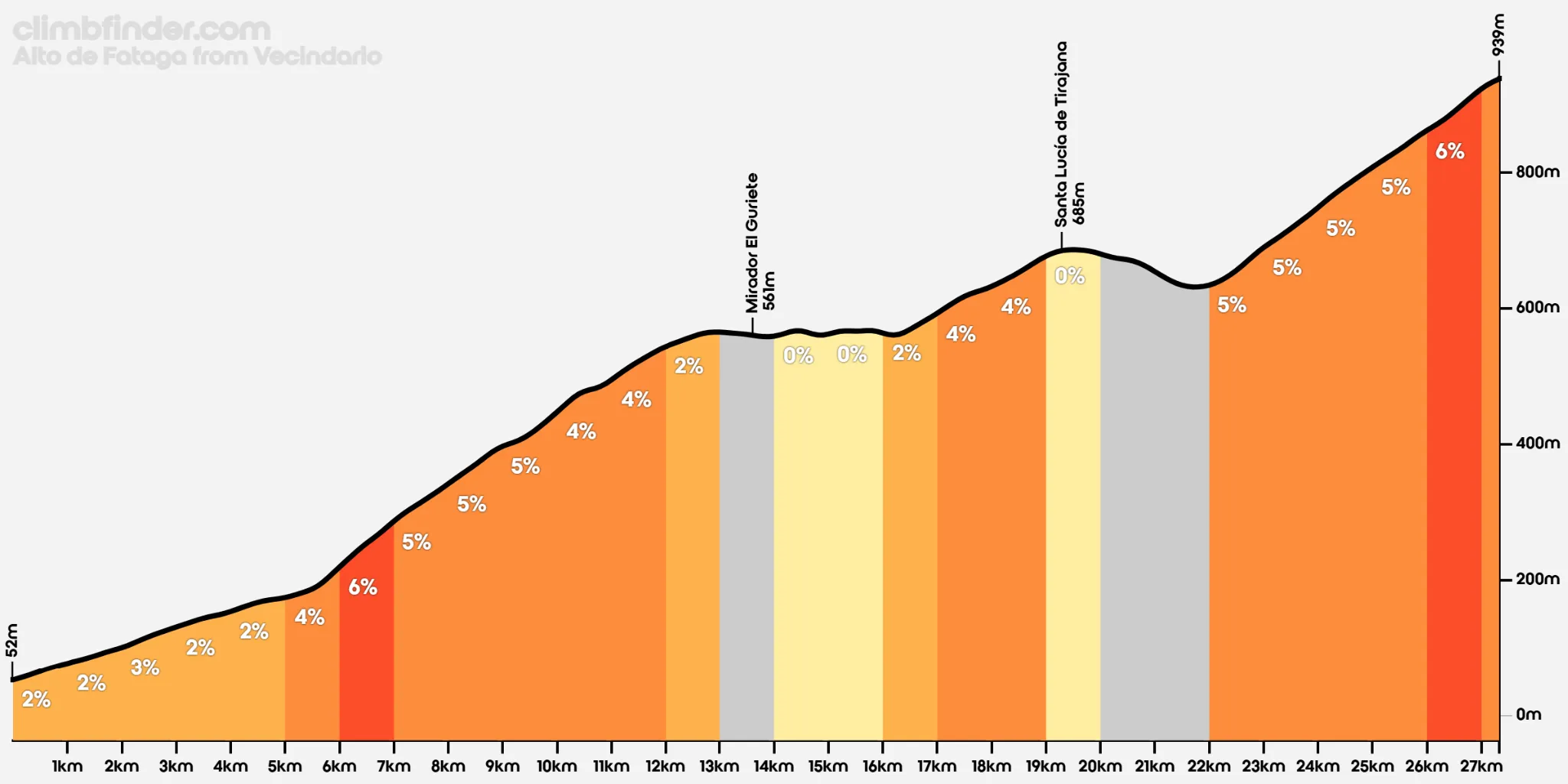
The ride starts in San Fernando via the GC-60 heading north. The road immediately climbs to the Degollada de las Yeguas viewpoint. After the first 7 km effort, there is a short flat section followed by a descent into the Fataga Valley.
From there, the road climbs steadily again, passing dramatic cliffs and the picturesque village of Fataga, until reaching San Bartolomé de Tirajana (Tunte). A place that marks the end of the route while offering a true glimpse into the traditional inland Gran Canaria.
Cycling events you can’t miss
Gran Canaria’s stable climate and excellent infrastructure have created ideal conditions for international cycling events—above all the Gran Canaria Bike Week, which attracts both professionals and thousands of amateur cyclists every year.
With more than three decades of history, it is one of the most established stage cycling events in the Canary Islands. It takes place in December, when much of Europe is in winter darkness. The program includes timed stages and cycling tours through the island’s most iconic landscapes, including climbs to Pico de las Nieves and rides around Soria. It is a week where sport, community, and travel experience merge seamlessly.
Gran Canaria as a base camp: Dunas Hotels & Resorts
Anyone serious about cycling on the island needs the right accommodation. Dunas Hotels & Resorts positions itself as a true base camp for cyclists, not just a place to stay.
The Suite & Villas by Dunas is Cycling Friendly Gold certified and works closely with Free Motion, one of the island’s leading cycling service providers.
Cycling-specific services include:
- Secure bike station
- Workshop and bike wash area
- Rental of road bikes, mountain bikes, and e-bikes
- Route advice and guided rides with professional guides
Meanwhile, accompanying guests enjoy spacious suites and villas surrounded by gardens and pools, close to the Maspalomas Dunes, in a calm and family-friendly atmosphere.
More about the event in our dedicated article: Gran Canaria Bike Week 2026: a week to explore the island on two wheels
Enjoy Gran Canaria with the best cycling routes
Gran Canaria is a vertical paradise—from relaxed rides through palm valleys to some of the toughest climbs in Europe. Its network of roads, dramatic ravines, and year-round mild climate make it a top destination for road cyclists worldwide.
When planning a cycling adventure, the right base camp makes all the difference. Comfortable accommodation, proper recovery options, and sport-oriented gastronomy are not extras—they are what turn a good cycling trip into an unforgettable one.
We’ll see you on the island’s roads.
