




Northern Gran Canaria is known for its unspoiled beaches, natural seawater pools, and stunning coastal scenery. From the famous Las Canteras Beach to the natural pools of Agaete and the peaceful bay of Sardina del Norte, the region offers excellent spots for swimming, snorkeling, surfing, and relaxing away from the main tourist crowds.

Beyond the famous dunes of the south, the island conceals its wild, authentic side – shaped by volcanic forces, Atlantic winds and centuries of salt and stone. The north of Gran Canaria is the island's best-kept secret, cherished above all by those who live here.
The route along the northern coast can be a little disorienting at first: which beaches are suitable for children? Where do the best waves break? And which natural pools offer shelter from the open Atlantic?
In this guide by Dunas Hotels & Resorts, we present – as true lovers of our island – a complete and unfiltered overview of the beaches in the north of Gran Canaria, drawn from the experience of those who visit them week after week.
What is so special about the beaches in the north?
To truly understand the northern coastline, you need to let go of the classic image of a white-sand beach. Here, the relentless force of the Atlantic, amplified by the trade winds, has spent thousands of years carving out a landscape unlike any other: black sand coves, pebble beaches – known locally as callao – and spectacular natural pools in which the water is constantly renewed by the tides.
Compared to the sheltered south, the north is more exposed to the full power of the Atlantic. But this is not a drawback – quite the opposite. From this rawness, fascinating marine ecosystems have emerged, and the coastline carries a vitality you feel the moment you arrive.
There is also an unmistakable authenticity to the north. There are no crowds here. Instead, you share the space with local families for whom a daily dose of the sea is simply part of life, with fishermen and athletes – people for whom this stretch of coast is not a destination but a home.
The 5 Best Beaches in the North of Gran Canaria
From the outskirts of Las Palmas de Gran Canaria to the municipality of La Aldea de San Nicolás, a wild and rugged coastline unfolds, where vast cliffs act as a natural wall against the tides. Over time, they have shaped beaches as varied as the landscape itself: black sand, pebbles, small coves, rock formations and natural sea pools.
1. Playa de las Canteras (Las Palmas de Gran Canaria)
To write about the beaches of the north without beginning here would be unthinkable. Las Canteras lies in the heart of the capital and is far more than a beach: stretching over three kilometres, it is the social centre of city life – a promenade alive with joggers in the morning and families enjoying the evening air at dusk.
The true secret of Las Canteras is La Barra, a volcanic reef running parallel to the shore at roughly 200 metres from the beach. This natural barrier acts as a breakwater, transforming the central and eastern sections into a vast, calm and crystal-clear natural pool – ideal for families with children, who can swim safely, watch colourful fish or simply play in the bright sand.
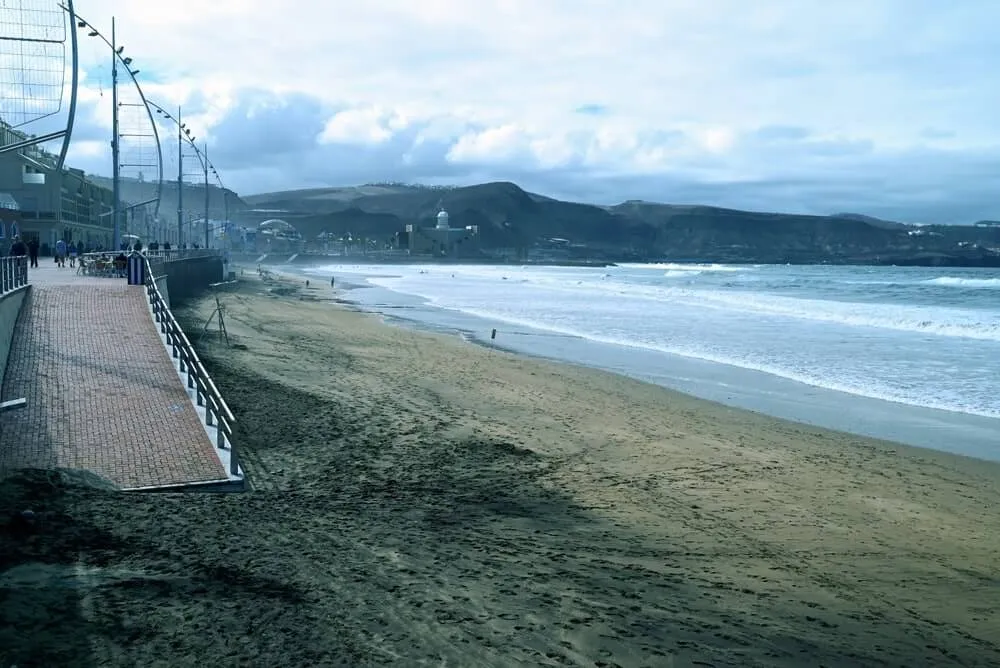
Getting here from a hotel in the south of the island is straightforward via the GC-1 motorway heading north. As Las Canteras is an urban area, parking on the street can be limited; the nearby car parks at the Las Arenas shopping centre or in the Santa Catalina district are a convenient option.
The promenade has its own rhythm at every hour of the day. In the La Cicer area, the atmosphere is young and surf-tinged, with plenty of terraces to linger over coffee or a cold drink. For a proper meal, head towards La Puntilla, where local restaurants serve dishes like papas arrugadas con mojo and calamares saharianos.
2. Playa del Puertillo and Los Charcones
Along the northern road GC-2 towards Arucas lies one of the finest combinations on the entire coastline: a small sandy beach alongside one of the most impressive natural sea pools on the island.
Los Charcones, situated right next to El Puertillo, holds the Blue Flag – a mark of excellent water quality and a reliable level of facilities. Accessible entrances, public toilets, showers and a lifeguard post are all in place. The rock-enclosed pools make the Atlantic an experience you can enjoy in a controlled and safe way.
The rocky crevices are home to a rich underwater world: with a mask and snorkel, you can spot sea bream, sargo and small rock crabs. And those who time their visit well are rewarded with sunsets in which the sun slowly sinks behind the silhouette of the northern hills – a spectacle that is hard to describe and harder still to forget.
3. Playa de San Felipe
Those in search of the island's wildest face – a direct, unmediated encounter with nature – will find it here. San Felipe lies along the coast of the municipality of Santa María de Guía and changes its character with the seasons: in summer, more sand is exposed; in winter, the sea pulls it back and reveals the stones beneath.
The waves that break here have a reputation among surfers and bodyboarders and are visited daily by swell seekers. However, due to the strong currents, this beach is not suitable for inexperienced swimmers or young children.
After a day at the water's edge, a short drive leads to the Cenobio de Valerón – a remarkable grain storage system built by the island's indigenous inhabitants, carved directly into the rock face of a dramatic cliff. It is one of the most impressive archaeological sites Gran Canaria has to offer.
4. Playa de Agaete and Las Salinas
Agaete is among the most picturesque places on the entire island. White houses with blue window frames, a majestic valley that flows seamlessly into the sea – there is a quietness and beauty here that cannot be manufactured.
At the entrance to the Puerto de las Nieves lie the Salinas, former salt pans that have been transformed into three interconnected natural pools. Concrete pillars, reminiscent of battlements, shield the pools from the open sea and allow for relaxed bathing in calm, clear water even when the swell picks up. Steps lead down into the water, sun terraces invite you to linger, and an underwater tunnel connects the pools to one another – a playful detail that delights children and adults alike.
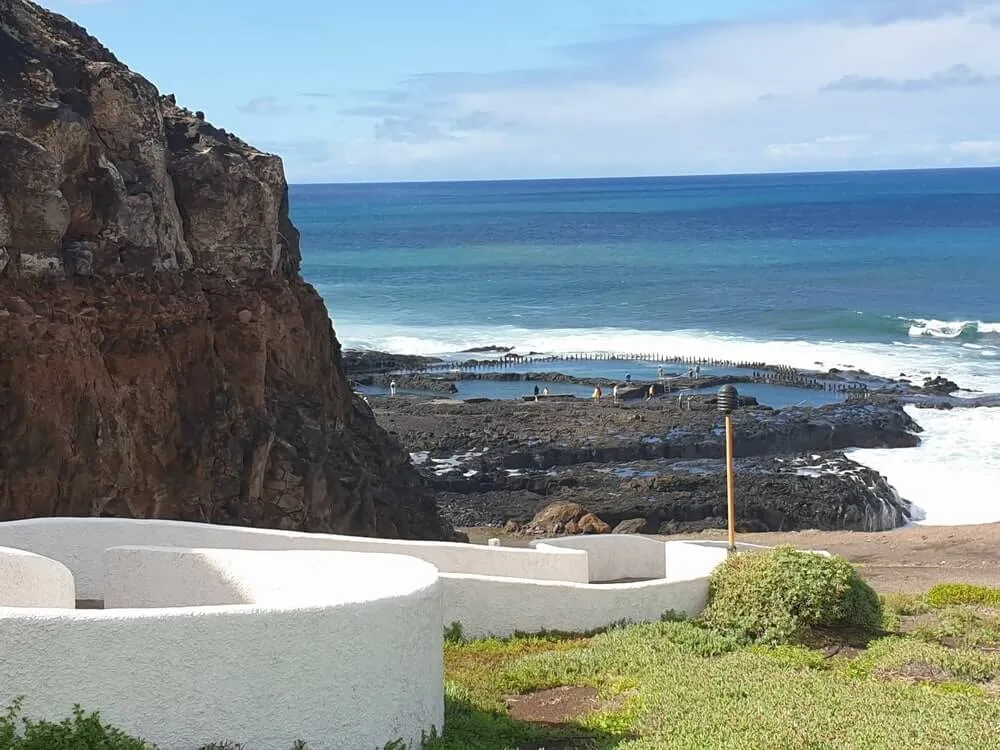
After a swim, it is only a few minutes on foot to the Puerto de las Nieves. Along the waterfront promenade, a selection of restaurants serving traditional Canarian cuisine awaits: fresh sama or abadejo, accompanied by escaldón de gofio and a glass of white wine from the Agaete valley – a lunch that makes the memory of this place complete.
5. Playa de Sardina del Norte
Nestled in a west-facing bay, Sardina enjoys unusually calm, clear and almost wave-free water for much of the year. Unlike many beaches in the north, it also boasts fine, warm golden sand. The atmosphere is maritime and unhurried, far removed from tourist bustle.
Sardina del Norte has earned an international reputation among diving and snorkelling enthusiasts. The seabed, accessible directly from the beach or the pier, forms a true underwater garden. With a little luck, you may encounter angel sharks (angelote – a protected and entirely harmless species), rays, octopuses, sea horses and large shoals of bream. It is one of those places where the silence beneath the surface feels deeper than anything above it.
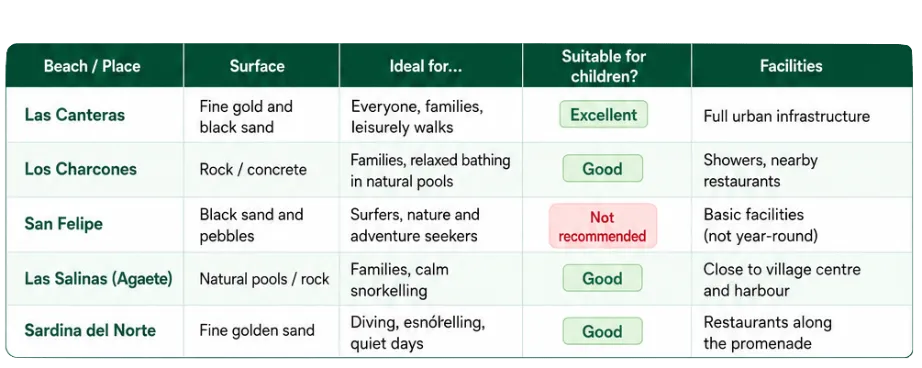
Comparison Table: Which Beach Is Right for You?
The North of Gran Canaria Awaits
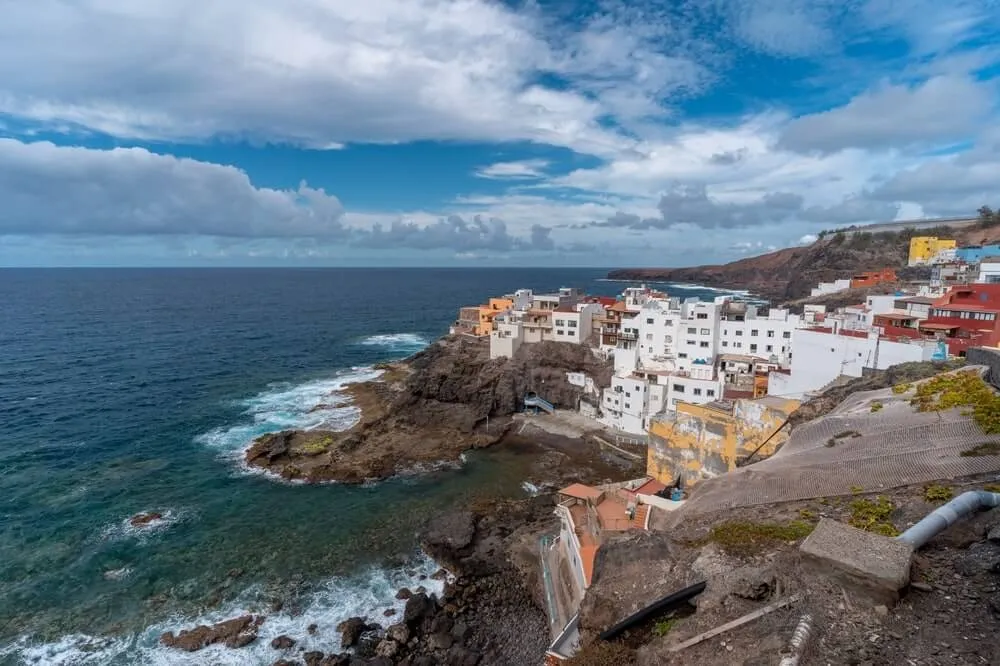
Exploring the beaches of the north means touching the soul of the island. It means leaving behind the ease of large tourist beaches for a few hours and instead swimming in a lava pool, eating fresh fish in a genuine fishing harbour and listening to the Atlantic breaking against the cliffs of Gáldar or Agaete.
After a day like that, the warmth and comfort of our hotels in the south of the island await – a place to rest and let the memories of your northern adventure settle quietly.
We'll see you at the coast.
