



Gran Canaria has a mild subtropical climate, perfect for switching off and relaxing. However, the island’s landscape and trade winds mean the weather can change completely within just a few kilometres. Here, we explain what it is really like so you know what to expect and what to pack.
Gran Canaria’s Contrasts: Three Areas, Three Climates
Gran Canaria is often called a “miniature continent”, and with good reason: the weather varies considerably depending on where you stay and which places you visit.
- South and southwest (such as Maspalomas or Puerto Rico): this is the leeward side of the island, sheltered from the prevailing winds. It is sunny and warm, with very little rainfall: annual totals often remain below 100 mm.
- North and northeast (such as Las Palmas de Gran Canaria or Arucas): these areas are directly exposed to the trade winds, creating a more humid, maritime climate. There is more cloud cover, and temperatures are slightly milder.
- Highlands (above 1,500 metres, including Roque Nublo): the mountainous interior is considerably cooler, with a much greater difference between daytime and nighttime temperatures. This is also the wettest part of the island.
Average Temperatures and Rainfall by Area
To help you plan your holiday or excursions, here are the average temperatures and monthly rainfall figures for the island’s three areas:
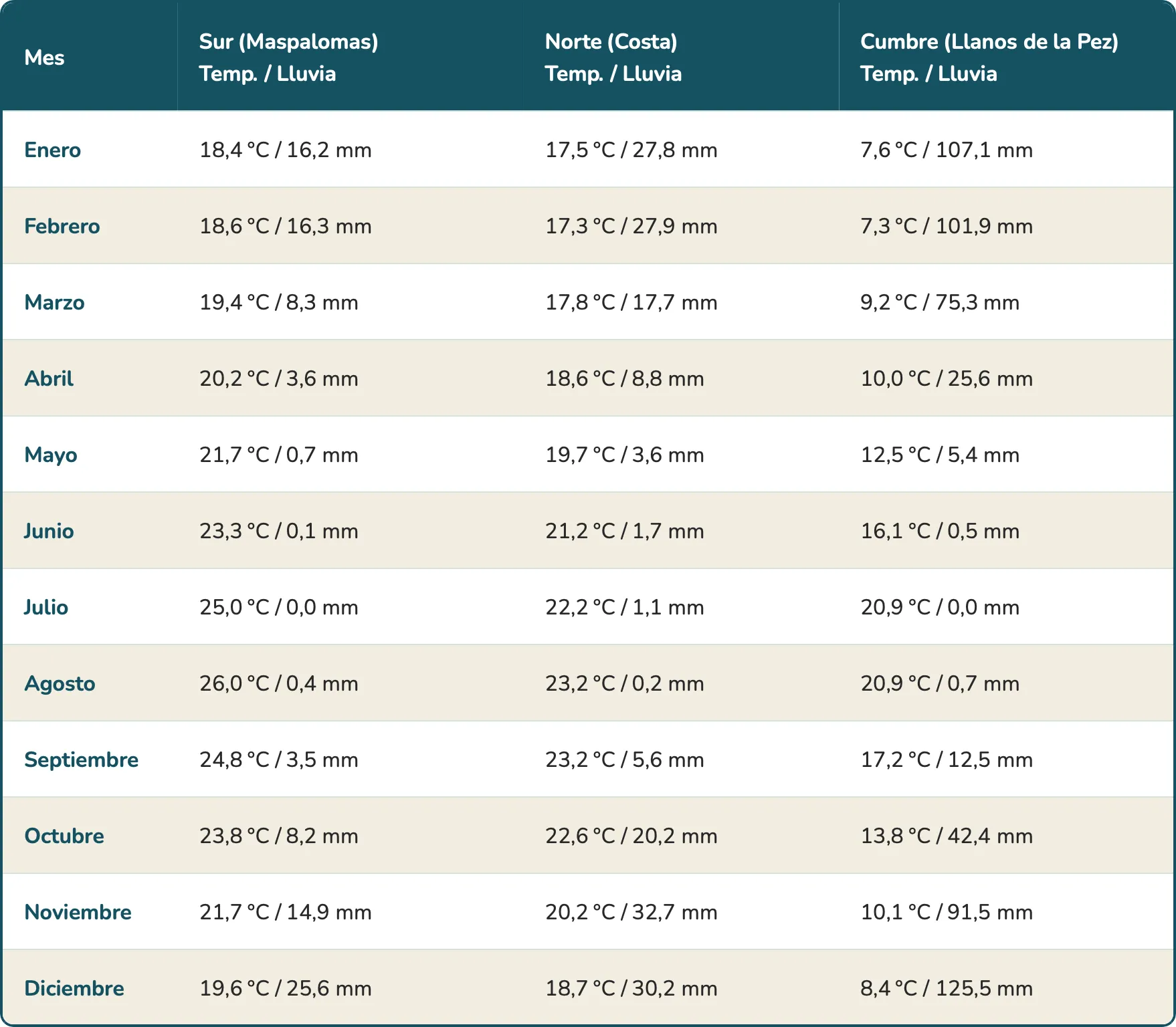
(Note: the figures show average temperatures and monthly rainfall in millimetres, according to the Climate Atlas of the Canary Islands.)
What Is the Weather Like Throughout the Year?
The official annual average temperature at the airport’s reference weather station, on the eastern side of the island, is 21.1°C, according to AEMET, Spain’s State Meteorological Agency. However, each season offers a different experience:
- Winter: mild temperatures and frequent sunshine on the southern coast. Sea temperatures are around 18°C. Snow occasionally falls in the highest parts of the island.
- Spring and autumn: ideal for hiking and mountain biking. There is very little rain on the coast, and the sea is pleasantly warm, reaching around 23°C in September.
- Summer: dry and warm, with August being the hottest month, with average maximum temperatures of 24.2°C at the airport. The ocean moderates the coastal heat, but you should expect strong sunshine and occasional windy days.
Special Weather Phenomena
- Panza de Burro: particularly from May to October, a low layer of cloud often settles over the north of the island and Las Palmas. It forms when the trade winds push moist air against the hillsides. Cloudy skies do not necessarily mean rain, and if you fancy some sunshine, the south is not far away.
- Calima: a mass of warm, dry air from the Sahara carrying fine airborne dust. During a calima, temperatures rise considerably, the sky takes on a coppery hue, and visibility is reduced.
The Advantages and Drawbacks of Gran Canaria’s Climate
The advantages:
- Consistent coastal weather: you can enjoy mild, pleasant temperatures for most of the year, without harsh winters.
- A wide range of activities: the variety of microclimates allows you to enjoy sunshine and beaches in the south, or cooler conditions for walking in the highlands, all in the same day.
- Very little rainfall in the south: reassuring for anyone hoping to enjoy relaxing days in the sunshine.
The drawbacks:
- Rapidly changing mountain weather: conditions in the highlands can change quickly, bringing cold temperatures, wind or heavy rain, so caution is essential.
- Calima days: airborne dust can make outdoor exercise uncomfortable and obscure panoramic views.
- Cloudy summer weather in the north: if you are hoping for guaranteed sunshine in Las Palmas during July or August, the Panza de Burro phenomenon may disrupt your beach plans.
- Cool sea temperatures in winter: swimming in seawater at 18°C can feel cold, depending on your personal tolerance.
Practical Tips for Your Trip
Dress in layers: if you leave your accommodation on the sunny southern coast for a scenic drive or a mountain walk, the weather can change dramatically. Wear layers. You might set off in short sleeves in the south, but at an altitude of 1,500 metres, you will notice the wind and the drop in temperature. Always carry a long-sleeved top, sun protection and a waterproof jacket in your backpack.
Before heading into the island’s interior, do not rely solely on the general weather forecast, which usually shows conditions at the airport or in the capital. We recommend always checking the forecast for the specific mountain municipality you plan to visit through official organisations such as AEMET.
