




Discover how to enjoy eternal summer in Gran Canaria. Year-round sunshine, what to see, the best areas and where to stay to make the most of every day.

Some destinations work in summer, others in winter, and then there is Gran Canaria, where the calendar loses its relevance because the climate rarely dictates your plans.
To speak of holidays in Gran Canaria is to speak of constant light, of al fresco breakfasts even in January, and of the reassurance that, with near certainty, the sun will accompany your day. The so-called “eternal summer” here is not a cliché; rather, it is a tangible sensation that fundamentally changes the way you travel. You do not check the forecast before heading out, you do not rearrange plans because of a passing cloud, and you certainly never feel “out of season”.
Thus, the question is not whether the weather will be good. Instead, it is how to organise your stay in order to make the very most of it.
The climate in Gran Canaria: why summer never truly ends
The climate in the Canary Islands is among the most stable in Europe. In Gran Canaria, particularly in the south, average temperatures hover between 22 and 26 degrees for much of the year. This is not extreme heat, but rather a comfortable warmth that allows you to spend entire days outdoors without fatigue.
While much of mainland Europe drops below 10 degrees in winter, in Maspalomas or San Agustín it is entirely normal to stroll along the seafront in short sleeves. The January sun here is not symbolic; it genuinely warms, illuminates and makes sea bathing possible on most days.
For that reason, when asked about the best time to travel to Gran Canaria, the most honest answer is that it depends far more on your availability than on the weather. The island works equally well in January, April, October or at the height of August.
Beginning in the south: dunes, lighthouse and ocean in a single day
If this is your first visit to the island, dedicating a full day to the Maspalomas area is a natural starting point.
There is something particularly special about walking through the Maspalomas Dunes early in the morning. At that hour, the sand still retains the coolness of the night, the wind gently traces soft ripples along the crests, and the silence is broken only by the distant sound of the sea. It is a landscape that surprises precisely because it does not feel European.
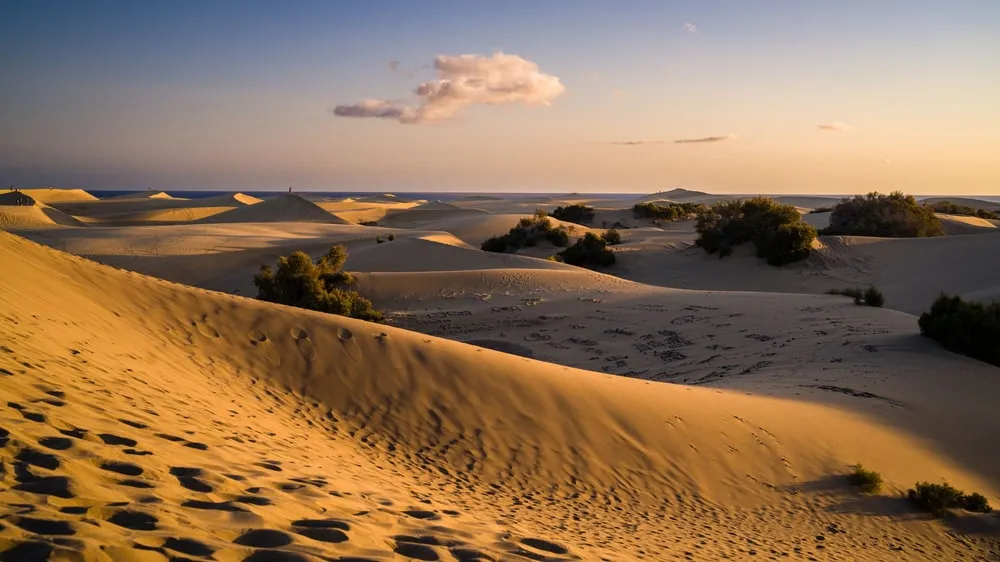
From there, the walk towards the Maspalomas Lighthouse offers a seamless change of scenery. You might end the morning at Maspalomas Beach, wide and luminous, before spending the afternoon strolling through Meloneras as the sun sinks over the Atlantic.
The advantage of staying in this area is evident: many of these experiences can be enjoyed without the need for lengthy journeys.
Playa del Inglés and San Agustín: two complementary atmospheres
Another appealing day can combine Playa del Inglés with San Agustín, two nearby areas with distinct personalities.
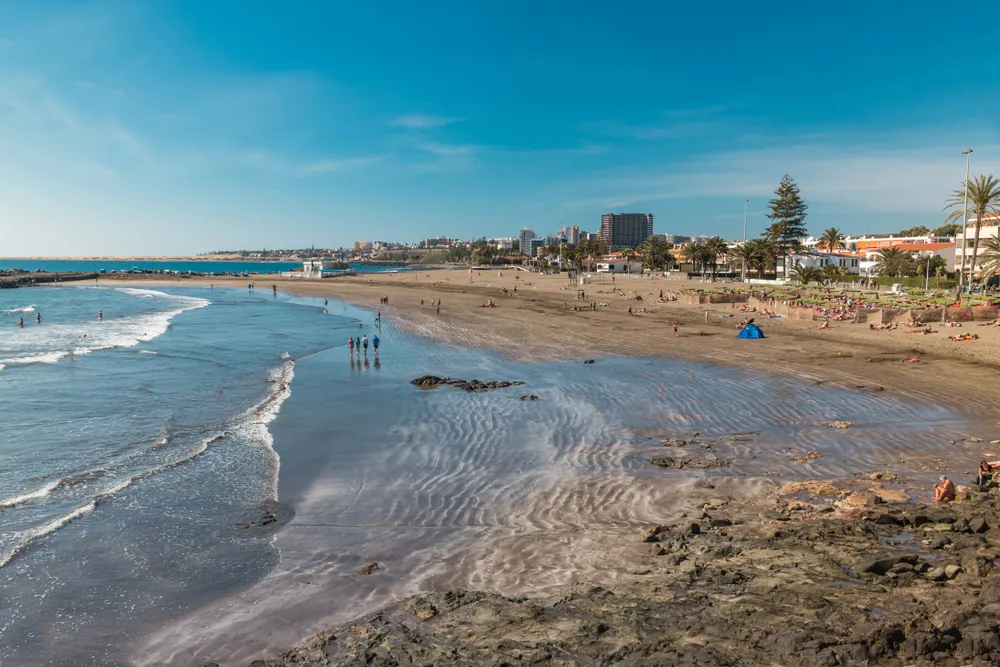
Playa del Inglés is expansive, lively and fully equipped. It is ideal for spending the morning by the sea, soaking up the more dynamic atmosphere of the south. Yet, within just a few minutes by car, the setting shifts entirely upon reaching San Agustín.
Here, the beach feels more intimate and quieter, with a gentler rhythm. The transition between the two is so swift that it is striking. You can enjoy both experiences within the same day without feeling as though you have crossed half the island.
Inland Gran Canaria: volcanoes, viewpoints and characterful villages
Gran Canaria is far more than coastline. Indeed, one of the most rewarding ways to understand the island is to dedicate a day to its interior.
Driving towards Roque Nublo reveals how dramatically the landscape transforms within just a few kilometres. Roads wind between volcanic mountains and panoramic viewpoints that offer sweeping, spectacular views.
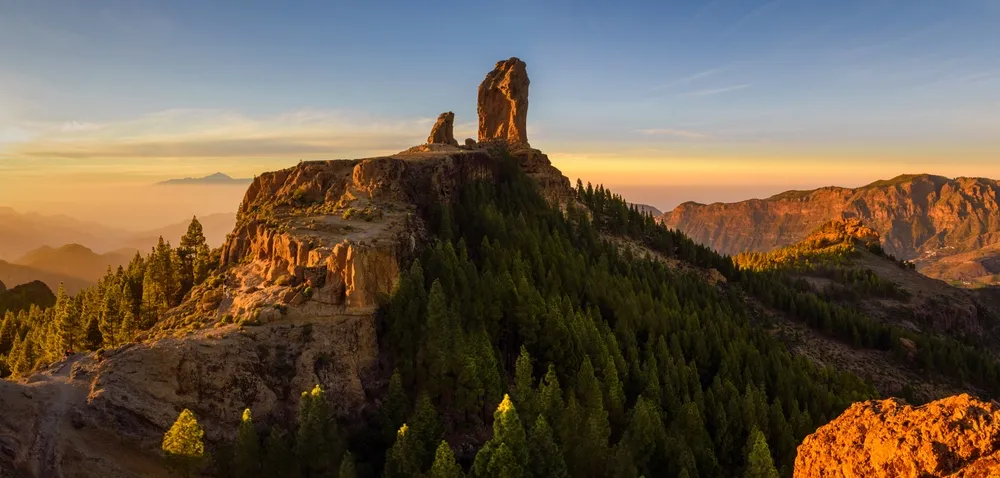
Along this route, it is well worth stopping in Tejeda, regarded as one of the most beautiful villages in Spain. Its whitewashed houses, mountainous setting and views of Roque Nublo create a scene entirely distinct from the coast. Wandering through its quiet streets is almost essential if you are seeking a more authentic face of Gran Canaria.
If you extend your journey, you might also visit Arucas, known for its impressive neo-Gothic church and long-standing rum tradition, or Agaete, with its harbour and natural swimming pools, offering yet another perspective on the north of the island.
What makes this particularly appealing is the possibility of spending the morning inland and returning to the south to end the day by the ocean. This combination of mountains and beach within less than 24 hours is one of the island’s greatest attractions.
What is the most beautiful thing to see in Gran Canaria?
The answer depends largely on the traveller. For some, the most striking sight is the Maspalomas Dunes at sunrise. For others, it is the mountainous interior and viewpoints around Roque Nublo. Some prefer the contrast between desert and sea in the south, while others find in villages such as Tejeda the island’s most authentic essence.
It is precisely this diversity that defines Gran Canaria. It is not a destination of a single postcard image.
Where to stay in Gran Canaria to make the most of the eternal summer
If your aim is to enjoy the stable climate while minimising travel time, the south offers some of the best areas in which to stay.
Maspalomas and San Agustín allow you to combine beaches, promenades and inland excursions without spending excessive time on the road. Such proximity is essential if you wish to organise your days geographically and avoid unnecessary journeys.
Within this setting, Dunas Hotels & Resorts offers several options across the same southern area.
Couples seeking tranquillity by the sea often appreciate the atmosphere of San Agustín, where properties such as Don Gregory by Dunas provide an adults-only experience with direct ocean views and an environment genuinely designed for rest. In addition, Maspalomas Villas by Dunas offers a four-star adults-only concept surrounded by gardens and close to the golf course, ideal for those seeking peace, privacy, and a relaxed atmosphere in the heart of southern Gran Canaria.
For families, Maspalomas Resort by Dunas and Suites & Villas by Dunas offer bungalow- or villa-style accommodation, more space and close proximity to the Maspalomas Dunes. This location makes it easy to combine mornings on the beach with afternoon strolls, without lengthy transfers.
Meanwhile, those who prefer a more dynamic setting may find Mirador Maspalomas by Dunas appealing, as it retains the geographical advantages of the south while offering a more versatile atmosphere.
Ultimately, beyond category or style, the key lies in choosing a base that allows you to concentrate your plans and enjoy the climate without logistical complications.
Frequently asked questions about holidays in Gran Canaria
When planning a holiday in Gran Canaria, common questions tend to revolve around the climate, the ideal length of stay and the best areas to choose. Below, we address some of the most frequent queries to help you organise your visit with greater clarity and confidence.
What is the best time to travel to Gran Canaria?
Gran Canaria is a year-round destination thanks to its stable climate. If you are looking to escape the European winter, the colder months are particularly appealing. Spring and autumn combine pleasant temperatures with fewer visitors, while summer brings long days and a livelier atmosphere.
What is the best month to visit Gran Canaria?
There is no single “best month”, as the climate remains mild throughout the year. Many travellers particularly value May, June, October and November for their balance between warmth and tranquillity. Nevertheless, even January and February allow for beach days and outdoor activities.
What is the most beautiful thing to see in Gran Canaria?
The Maspalomas Dunes, the surroundings of Roque Nublo and villages such as Tejeda rank among the most impressive sights. The contrast between coastline, mountains and characterful towns makes the island visually diverse and compelling.
How many days are recommended for Gran Canaria?
Between four and six days allow you to combine beach time, inland exploration and relaxation without haste. If you have a full week, you can explore both the south and parts of the north at a more leisurely pace.
Which is the best area of Gran Canaria to stay in?
The south — Maspalomas, Playa del Inglés and San Agustín — is generally the most balanced option for those seeking stable weather and proximity to the main beaches. It allows you to organise plans by area and reduce travel time.
Which is the best Canary Island for a holiday?
This depends on the experience you are seeking. However, Gran Canaria stands out for its balance between stable climate, varied landscapes and well-developed tourism infrastructure, making it one of the most complete options within the archipelago.
Gran Canaria is not a seasonal destination. It is a place where summer stretches, softens and endures with a stability that is uncommon in Europe. Once you understand that the climate here rarely dictates your plans, holiday planning ceases to revolve around dates and instead becomes a matter of freedom — the freedom to enjoy each day with the possibility of improvisation.
